Guest post by Judy Hollaway
When my mother was diagnosed with early-stage Alzheimer’s, an additional crisis would rock our world. Our oldest sister—her primary caretaker —was struck by a vehicle head on. Her injuries required months of rehabilitation. Another sister and I lived out of town and had to assume responsibility for both my mother and injured sister. It was overwhelming, so we arranged for a lady to help assist in care for my mother at home.
After my sister returned home, we had many challenges with home care. We tried to keep her and my mother together, relying on the sitter. Yet, moving my mother was not workable, and financial strain made continuous sitter care impossible. My mother began wandering away from her home, and it became clear that home care was no longer safe or sustainable. The reality of placing her in a care facility was upon us.
Transitioning my mother to a care facility was a difficult decision and one of the hardest days of my life. The sense of leaving her with strangers filled me with anguish and worry, especially knowing she could not voice if she was hungry, hurt, or in need. The emotional weight was immense, but safety had to come first.
During the long drive home, I gradually found comfort in our choice, recognizing that our decision was made from love and concern for her well-being and we would still be caring.
As weeks passed, I found unexpected blessings. Our routine visits became precious, not only for my mother, but for other residents. Sharing music and fellowship created new bonds and uplifted spirits, proving that meaningful moments can emerge amidst change. The experience taught me that transition, though painful, can reveal surprising blessings and invite us to serve, heal, and grow together. The journey has its challenges, but approaching it with compassion and openness can bring comfort and purpose to all involved.
If it is time for transitional care, do not feel that you are abandoning your loved one. You are doing what is best to still care for them. Remember, they may not know you, but you know who they are. And you are still caring for them.
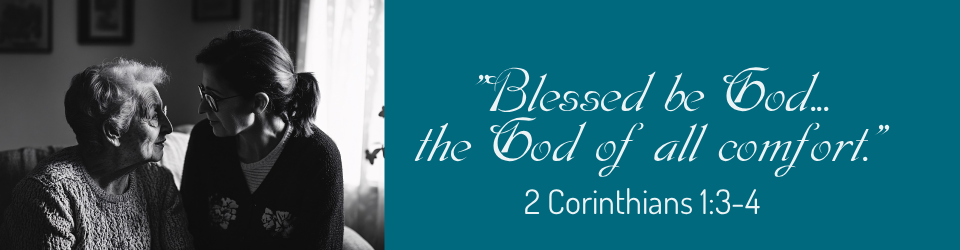
Blessed be God, even the Father of our Lord Jesus Christ, the Father of mercies, and the God of all comfort;
Who comforteth us in all our tribulation, that we may be able to comfort them which are in any trouble,
by the comfort wherewith we ourselves are comforted of God.
2 Corinthians 1: 3-4 KJV

Judy Hollaway is a pastor’s wife and Sunday School teacher with forty years of experience. After overcoming five years of depression, she dedicated myself to ministering to women and led a Refining Ladies Ministry until her recent retirement. For twelve years, she has written online devotionals for readers and friends. You can read them online at Judy’sPrayerChair or connect with her on Facebook.
 Tracy Crump dispenses hope in her award-winning book, Health, Healing, and Wholeness: Devotions of Hope in the Midst of Illness. A former intensive care nurse, she cared for her parents and her mother-in-law and understands both the burdens and joys of caregiving. Her devotions have been featured in Guideposts books, The Upper Room, and many other publications, and she has contributed 28 stories to Chicken Soup for the Soul® books. She also conducts writing workshops, freelance edits, and produces The Write Life newsletter for writers. But her most important job is Grandma to five completely unspoiled grandchildren.
Thank you for sharing your experience with this difficult reality, Judy. Prayers for all your family.
This is helpful, esp as our Mom doesn’t understand why we “can’t come get her and take her home” and asks for this often.
Tracy, thanks for all your encouragement, too!
That’s so hard, Becky. I’m glad Judy’s post spoke to your situation.
Thank you for this beautiful post, Judy. You explained well how moving our loved ones to a facility can be an act of compassion,