Guest post by Lakisha Mitchell-Buffington
I know therapy can carry a negative connotation—and honestly, I’ve been dodging it for years. But I cannot begin to express the freeing feeling I experience after each session.
There’s something powerful about getting things out of your head, weights off your shoulders, and heaviness off your heart—especially in a safe space where someone helps you sort through it all to find clarity and direction. I’ve always been a determined person, but I don’t think I realized that the person I’ve been trying hardest to prove something to is . . . me.
I remember so clearly the day my grandmother died. I felt like a part of me died too. She was my rock. Without her, I spent a long time just muddling through life.
Eventually, my mother and I grew closer—especially when I became a mom myself. Her presence and support helped lessen the loneliness. But then dementia took her from me about six years ago… and again, I found myself muddling: lost, alone.
Please understand—God has always been my source. I was born, bred, and taught to breathe in a church-going community. But it wasn’t until about four years ago that I really started discovering my divine identity—who God truly is to me and who I am to Him.
As I’ve grown, I’ve realized I carry a deep need to protect the people I love. That’s how I show love. Today, my therapist gave that instinct a name: a provider–caregiver mindset. It’s very similar to being a “high-functioning achiever.” That’s a blessing when it comes to setting goals and crushing them—but not so great when life doesn’t go according to plan . . . or when it comes to taking care of me.
It’s a double-edged sword.
That drive has, on many occasions, been a source of stress and self-criticism, especially when unmanaged. But the freedom is in recognizing it—observing those behaviors in myself and finding balance not just in work, caregiving, and life… but within my whole self.
One of my daily affirmations is: “My life is aligned with good health, balance, and peace.”
Caring for others is part of who I am—and I’m proud of that. It’s a beautiful trait. It honors God when we serve, help, and uplift those around us. My challenge is learning to balance those natural provider tendencies with intentional self-care, because that is crucial for my long-term well-being.
I’ve asked God to allow me to see my future as the best version of myself—healthy, balanced, and at peace. What spills out of that will bless not only me, but my children . . . and their children.
God has His part covered. Now it’s on me to do mine—to live peacefully, stay focused on my own journey, and do the necessary inner work.
How about you?
That you also aspire to lead a quiet life, to mind your own business, and to work with your own hands,
as we commanded you, that you may walk properly toward those who are outside, and that you may lack nothing.
1 Thessalonians 4:11 NKJV

Lakisha Mitchell-Buffington is a woman of many hats—wife, mother, author, educator, and entrepreneur—but above all, she’s a passionate encourager of others. With a heart full of purpose, she’s dedicated to inspiring greatness in the lives she touches.
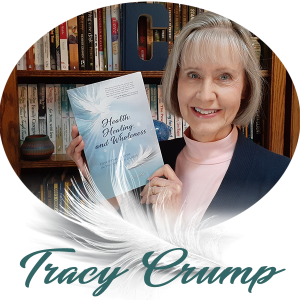
Tracy Crump dispenses hope in her award-winning book, Health, Healing, and Wholeness: Devotions of Hope in the Midst of Illness (CrossLink Publishing: 2021). A former intensive care nurse, she cared for her parents and her mother-in-law and understands both the burdens and joys of caregiving. Her devotions have been featured in Guideposts books, The Upper Room, and many other publications, and she has contributed 26 stories to Chicken Soup for the Soul® books. She also conducts writing workshops, produces a newsletter for writers, and does freelance editing. But her most important job is Grandma to five completely unspoiled grandchildren.



“My challenge is learning to balance those natural provider tendencies with intentional self-care, because that is crucial for my long-term well-being.” So true, Lakisha. We cannot care for others most effectively if we fail to care for ourselves.
Self-care is one thing we caregivers are universally short on. Thank you for commenting, Diana!
Diana this was a challenge for me as well. I must say one of the first exercises that my therapist had me to do was to declutter a space AND, make it my own. My task was to create a space just for me, with things I like, a place I could retreat to and to set boundaries for this space.
I went to counseling a week ago. While being sandwiched between caring for an autistic adult and my aging mother, we discovered a few of our “typical” adult children were also struggling.
I needed an extra objective voice, one that wasn’t afraid to say hard things or challenge me personally.
Caregivers can choose help, but many of us don’t always ask for help. (I’ve always had a hard time asking for help.)
ALL of my people are important to my heart, but I’m tired. I want to stay focused on ALL of our dearest ones.
A fresh voice speaking Jesus truth has been both inspiring and encouraging.
Thank you for sharing.
I’m so glad counseling has proven useful for you, too, J.J. You have a lot on you, and there’s no shame in asking for help. Blessings!
J.J. you’re so welcome. I am extremely grateful that my therapist respects and understand my spiritual growth journey. And because I’m completely open with him and not as forthcoming with my Apostle, I have left conversations feeling confused. But, what I’ve learned is that balance and boundaries are both therapeutic and spiritual. I just made a post on my personal page about this very thing. Where one is about self – protection, the other is about peace, love, and honoring God through our actions. Remember Jesus teaches us to love others as we love ourselves. In my opinion sometimes we need to work that scripture backwards. In order to honor God, we must love ourselves so that we can wholly love others as He wishes us too. It does take practice, but if I don’t take time for myself and relay that need to my family, I find that I’m short tempered and sometimes a bit mean, and that’s not how I want to show up for them. So, I let them know I need self care time so that I can love them as they deserve to be loved.
Thank you, Lakisha, for your vulnerability about your journey toward counseling. I know it will benefit many caregivers and others.
Tracy, thank you for holding space for me to share my story. I’m immensely grateful and truly believe that this is my calling. I often remind myself of how Jesus felt in the Garden of Gethsemane when He was taking to God, “Father if I must drink of this cup”…. that statement lets me know that this journey is not just about me. So Lord if I must travel this journey that it’s not my will but His that be done.”
That’s beautifully said, Lakisha. I’m just grateful God connected us and that you were willing to share your heart with my readers.